Flavors of the Desert: A Taste of Abu Dhabi’s Soul
Ever wondered how food can tell the story of a city? In Abu Dhabi, every bite is a journey through tradition, warmth, and surprise. I never expected falafel wraps at dawn or saffron-laced lamb at family gatherings—but here, meals are more than sustenance. They’re invitations. The capital of the UAE doesn’t just serve food; it shares culture on a plate, blending heritage with modern flair in ways that’ll blow your mind. From humble street corners to grand family feasts, Abu Dhabi’s culinary landscape reflects centuries of resilience, generosity, and connection. To taste this city is to understand its soul—one meal at a time.
The Heartbeat of Hospitality: Food as Culture in Abu Dhabi
In Abu Dhabi, food is far more than nourishment—it is a living expression of Emirati identity, rooted deeply in the values of generosity, respect, and community. Meals are not rushed affairs but moments of connection, where time slows and conversation flows as freely as cardamom-scented coffee. The concept of hospitality, or diyafa, is not a social nicety but a cultural obligation, one that shapes every aspect of dining life. Whether it’s an unexpected invitation to a family home or a tray of dates offered at a government office, sharing food is an act of trust and welcome.
This spirit is especially evident during Ramadan, when the city transforms into a nightly celebration of communal giving. At sunset, mosques open their doors to all, serving free iftar meals to thousands regardless of background. These gatherings are not displays of charity but affirmations of unity, where the breaking of the fast becomes a shared spiritual experience. Even outside religious observances, the home remains the heart of Emirati dining culture. Large platters are placed at the center of floor-seated circles, and everyone eats from the same dish—a practice that reinforces equality and closeness.
For visitors, accepting such invitations is a privilege, but it comes with unspoken expectations. Removing shoes before entering a home, waiting for the host to begin eating, and expressing sincere gratitude are small gestures that carry great weight. Refusing food can be seen as rejecting the host’s kindness, so even a modest portion should be accepted with appreciation. Understanding these customs allows guests to participate meaningfully in one of the most profound aspects of Emirati life: the belief that to feed someone is to honor them.
Street Eats with a Story: Where Locals Really Eat
Beyond the gleaming towers and luxury hotels, Abu Dhabi’s true culinary rhythm beats strongest on its streets. Here, food is accessible, aromatic, and deeply woven into daily routines. Long before the sun climbs high, men in traditional kanduras gather around small kiosks, hands wrapped around steaming cups of karak tea—a spiced, milky brew that fuels mornings across the city. These roadside vendors, often tucked beside mosques or near market entrances, are not just refreshment stops but social hubs where news is exchanged and friendships nurtured over shared sips.
One of the most beloved street foods is the falafel wrap, served in thin, warm khubz and packed with herbs, pickles, and tahini. Found near Central Market and in residential neighborhoods like Al Nahyan, these unassuming stalls draw long lines of office workers, students, and families. The experience is sensory: the sizzle of chickpea balls frying in oil, the tang of freshly chopped parsley, the warmth of the bread straight from the oven. Unlike polished restaurant versions, these wraps are messy, flavorful, and made with urgency—each bite a testament to efficiency and authenticity.
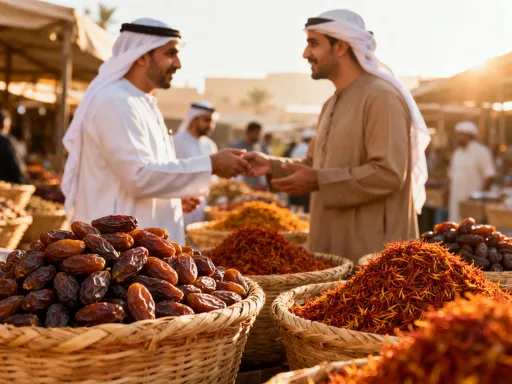
Dates, too, play a starring role in street food culture. Sold in woven baskets or clear boxes at nearly every corner shop, they are offered freely to guests and consumed at all hours. Varieties like Khunaizi and Fardh are prized for their caramel-like sweetness and soft texture. Many locals eat a few dates each morning as both tradition and natural energy boost. Street vendors often pair them with laban or fresh milk, echoing Bedouin customs from generations past. These everyday rituals may seem small, but they form the backbone of Abu Dhabi’s food identity—simple, generous, and deeply rooted in place.
From Oasis to Table: The Roots of Emirati Cuisine
To understand Emirati cuisine is to journey into the harsh yet resourceful world of the desert. Before modern infrastructure, survival depended on what the land and sea could provide. Dates, grown in the fertile oases of Al Ain, were not just food but currency and medicine. Camel milk sustained nomadic tribes during long desert crossings, while fish from the Arabian Gulf offered essential protein. These ingredients, born of necessity, became the pillars of a cuisine defined by resilience and adaptation.
One of the most iconic dishes, machboos, reflects this history. A spiced rice dish typically made with chicken, lamb, or fish, it combines dried limes, saffron, and black lime for a bold, tangy flavor. The dish evolved from centuries of trade with India and Persia, where merchants brought spices that transformed local cooking. Traditionally cooked in a large pot over open flame, machboos is reserved for gatherings, symbolizing abundance and celebration. It is always served communally, with diners gathering around the platter to eat with their right hands—a practice that maintains connection to ancestral customs.
Another cherished staple is luqaimat, golden, doughnut-like balls drizzled with date syrup. These sweet morsels are especially popular during Ramadan and Eid, often prepared in large batches by mothers and grandmothers. The process is labor-intensive—kneading the dough, frying in small portions, and soaking in syrup—but the result is a treat that carries warmth and memory. Similarly, chebab, a spongy pancake infused with cardamom and saffron, is cooked on griddles and served with date honey. These foods are not just desserts; they are edible heirlooms, passed down through generations and tied to moments of joy and togetherness.
The preparation methods themselves tell a story. Many traditional dishes are still made using time-honored techniques—hand-grinding spices, slow-cooking meats, and fermenting doughs. While modern kitchens now have electric appliances, older Emiratis often insist on the authenticity of traditional tools like the mihmas (clay oven) or the madbasa (wooden press for date syrup). This dedication to method ensures that even as the city modernizes, the soul of its cuisine remains intact.
Modern Bites, Timeless Flavors: Fusion in the Capital
Abu Dhabi’s food scene today is a dynamic blend of reverence for tradition and openness to innovation. While classic dishes remain central to Emirati life, a new generation of chefs is reimagining them with contemporary techniques and global influences. This evolution is not a departure from culture but an expansion of it—one that honors the past while embracing the future. High-end restaurants across the city are leading this movement, offering refined interpretations of heritage cuisine without losing their cultural essence.
At select fine dining establishments, machboos is deconstructed into elegant components: spiced rice molded into perfect cylinders, tender lamb served sous-vide, and a drizzle of black lime emulsion. Presentation is meticulous, lighting is soft, and service is polished—yet the flavors remain unmistakably Emirati. These dishes are not for everyday consumption but for special occasions, allowing locals and visitors alike to experience tradition through a modern lens. Such reinterpretations are met with pride rather than resistance, seen as a way to elevate national cuisine on the global stage.
At the same time, international fusion concepts thrive—especially those that respect halal dietary laws and local palates. Japanese-Emirati collaborations, for example, might feature sushi rolls wrapped in saffron rice and filled with spiced chicken, while Italian menus offer camel meat ravioli with date reduction sauce. Even cafes experiment thoughtfully, blending cardamom into lattes or serving date-flavored pastries alongside croissants. These fusions are not gimmicks but thoughtful dialogues between cultures, made possible by Abu Dhabi’s cosmopolitan population and its spirit of openness.
What makes this culinary evolution sustainable is its grounding in authenticity. Chefs often consult elders and home cooks to ensure their adaptations stay true to original flavors. Cooking workshops, food festivals, and heritage dinners further bridge the gap between old and new, inviting the public to taste, learn, and preserve. In this way, Abu Dhabi’s modern food scene does not erase tradition—it celebrates it, ensuring that Emirati cuisine continues to evolve without losing its soul.
Dining Etiquette Decoded: How to Eat Like a Local
Navigating Abu Dhabi’s dining culture can be both rewarding and nuanced, especially for first-time visitors. While locals are gracious and forgiving of cultural missteps, understanding basic etiquette enhances the experience for everyone. One of the most important customs is eating with the right hand. In traditional settings, especially when dining from a shared platter on the floor, the left hand is considered unclean and should not be used for eating or passing food. This practice, rooted in Islamic tradition, remains widely observed in homes and informal gatherings.
Another key principle is accepting hospitality with gratitude. It is customary for hosts to offer food or drink multiple times, and declining immediately may be seen as impolite. Even if you are not hungry, accepting a small portion or sipping tea shows respect. Similarly, complimenting the meal is expected—phrases like “The food is delicious” or “You are very generous” go a long way in making the host feel appreciated. If invited to a home, bringing a small gift such as dates, Arabic coffee, or sweets from a local bakery is a thoughtful gesture.
Meal timing also follows a distinct rhythm. Lunch, the main meal of the day, is typically served between 1:00 and 3:00 PM, especially on weekends when families gather. Dinner starts late, often after 8:00 PM, allowing time for prayer and relaxation. Coffee, or gahwa, is poured continuously throughout visits, served in small handleless cups and always with the right hand. It is not necessary to finish every cup, but placing your hand over the cup signals that you’ve had enough. Understanding these rhythms helps visitors align with local life rather than resist it.
At buffets or public events, it’s important to take only what you can eat. Wasting food is considered disrespectful, especially in a culture that values moderation and gratitude. If dining in a mixed-gender setting, men and women may sit separately in more conservative households, though this is less common in public restaurants. Overall, the guiding principle is respect—toward the host, the food, and the traditions behind them. When in doubt, observe and follow the lead of those around you.
Market to Meal: A Day in the Life of Abu Dhabi’s Food Markets
The pulse of Abu Dhabi’s culinary life can be felt most vividly in its markets. From the early morning bustle of fish souks to the afternoon energy of produce stalls, these spaces are where tradition meets daily necessity. Al Ain Central Market, though slightly outside the city, remains a model of authentic Emirati commerce, where farmers, fishermen, and vendors gather to sell the freshest ingredients. The air is thick with the scent of cumin, coriander, and briny seafood, while shouts of bargaining and laughter echo through narrow aisles.
Fish souks in areas like Mussafah are particularly vibrant. At dawn, boats unload their catch—hamour, shaari, and kingfish—still glistening with seawater. Vendors clean and fillet on the spot, offering advice on preparation and cooking methods. Many families return weekly to buy directly from trusted sellers, building relationships that last for years. The fish is often cooked the same day, grilled simply with lemon and herbs or slow-cooked in spiced stews. This direct farm-to-table connection ensures freshness and supports local livelihoods.
Spice stalls are another highlight, their shelves lined with colorful jars of saffron, turmeric, and dried limes. These ingredients are not just for flavor but for health, with many believing in their digestive and immune-boosting properties. Vendors often mix custom blends for customers, sealing them in small paper packets. Date vendors, too, offer dozens of varieties, each with its own texture and sweetness profile. Some are soft and syrupy, others firm and nutty—ideal for different dishes or snacking.
These markets are not just for individuals but also supply high-end restaurants seeking authentic ingredients. Chefs visit regularly to source seasonal produce, fresh herbs, and specialty items like camel milk or wild honey. The relationship between market and kitchen strengthens the entire food ecosystem, ensuring that even modern interpretations of Emirati cuisine remain grounded in real, local flavors. For visitors, walking through these markets is an education in taste, seasonality, and community—one that deepens appreciation for every meal served.
Saffron, Dates, and Memories: Why Abu Dhabi’s Food Stays With You
Long after the spices have faded from your palate and the last date has been eaten, something lingers—a feeling, a memory, a sense of having been truly welcomed. Abu Dhabi’s food does not simply feed the body; it touches the heart. It speaks of ancestors who survived the desert with little, of mothers who spend hours preparing meals for Eid, of strangers who offer tea with a smile. To eat in this city is to be embraced by a culture that measures wealth not in gold but in generosity.
The emotional resonance of Emirati cuisine lies in its consistency and sincerity. There are no pretensions, no performative gestures—just food made with care and shared without hesitation. A cup of gahwa offered at a government office, a plate of luqaimat handed to a neighbor, a family gathered around a steaming pot of machboos—these moments are not curated for tourists but lived daily. They reflect a worldview in which hospitality is sacred and community is everything.
For visitors, especially women managing households and seeking meaningful travel experiences, Abu Dhabi offers something rare: authenticity without austerity, tradition without rigidity. You can stand in a bustling souk watching dates being sorted by hand, then enjoy a five-star reinterpretation of chebab in a candlelit restaurant—all in one day. This duality is not contradictory but complementary, showing how culture can evolve while staying true to its roots.
In the end, tasting Abu Dhabi is not about checking dishes off a list. It’s about understanding a people through their most intimate act—sharing food. It’s about realizing that a simple falafel wrap at dawn carries the same weight as a royal banquet, because both are offered with the same intention: connection. So come with an open heart, a curious palate, and a willingness to accept what is given. Let the saffron, the dates, the stories stay with you. Because once you’ve tasted Abu Dhabi’s soul, you carry a piece of it home.