You Won’t Believe How Vientiane’s Terrain Changes Everything
Vientiane isn’t just another quiet capital — it’s built on a secret landscape that shapes every part of the experience. Nestled along the Mekong River, with flat plains, sudden elevation shifts, and lush pockets hidden in plain sight, the city’s special terrain makes exploring feel like uncovering a quiet puzzle. I never expected how much the ground beneath my feet would change my perspective — from sunrise bike rides to riverside temples that seem to rise out of nowhere. The rhythm of life here is tied not to traffic lights or skyscrapers, but to the slow breath of the river, the soft swell of red earth, and the way the land opens up after the rains. In a world where travel often means chasing spectacle, Vientiane teaches you to look down — and discover how terrain shapes everything.
The Hidden Geography of Vientiane
Vientiane, the capital of Laos, rests on the northeastern bank of the Mekong River, where the land flattens into a broad, fertile floodplain. This low-lying terrain, shaped by centuries of river sediment, defines the city’s physical character and daily rhythm. Unlike capitals that rise into hills or mountains, Vientiane unfolds in gentle layers, its streets and structures hugging the earth. Yet within this apparent flatness lies subtle variation — a slight incline near temple grounds, a patch of elevated soil where urban parks meet residential zones, or the seasonal emergence of dry land as the Mekong recedes. These quiet shifts in elevation are easy to overlook, but they play a crucial role in how the city functions and how visitors experience it.
The Mekong River is the lifeblood of this terrain, swelling during the monsoon months from May to October and contracting in the dry season from November to April. When water levels rise, parts of the riverbank become inaccessible, pathways flood, and the city adapts with temporary walkways and adjusted routines. Locals refer to this as the land "breathing" — expanding and contracting with the seasons. During the dry months, vast stretches of sandy shoreline emerge, revealing paths, boat moorings, and even old foundations that vanish underwater for half the year. This cyclical transformation is not a disruption but a natural rhythm, one that shapes everything from agriculture to transportation.
One of the most fascinating aspects of Vientiane’s geography is how elevation subtly influences sacred spaces. Pha That Luang, the golden stupa and national symbol of Laos, stands on a raised platform that lifts it above the surrounding flatland. This intentional design not only enhances its visual prominence but also protects it from seasonal flooding. Similarly, areas around Wat Si Saket and the That Dam stupa sit slightly higher than nearby roads, suggesting ancient awareness of water patterns. Urban parks like Kaysone Phomvihane Park and Sisaket Garden follow this logic, using slight grading to improve drainage and create micro-environments for trees and walking paths. These elevation changes are modest — often just a few feet — but they reflect a deep understanding of the land’s behavior.
How Terrain Influences Daily Life and Culture
The terrain of Vientiane is not just a backdrop; it actively shapes the way people live, move, and gather. In a city where rainfall can be heavy and sudden, drainage is a constant consideration. Streets are designed with shallow curbs and open channels to allow water to flow naturally into the river or nearby green spaces. During the wet season, some outer neighborhoods become temporarily impassable by car, but remain accessible by motorbike or foot via raised footpaths. This seasonal adaptability is woven into daily life — markets shift locations, school routes are adjusted, and household routines account for humidity and dampness. Rather than resisting these conditions, residents work with them, using natural ventilation, elevated homes, and permeable surfaces to stay comfortable.
Open spaces are essential to this way of life. Unlike densely packed cities where green areas are scarce, Vientiane integrates parks, temple courtyards, and tree-lined avenues into its urban fabric. These areas serve multiple purposes: they provide shade, improve air quality, and act as communal gathering spots. In the early mornings, you’ll find families practicing tai chi, children playing near fountains, and elders sitting on benches beneath the canopy of rain trees. These green corridors are not just aesthetic; they follow the natural slope of the land, allowing water to filter through during rains and reducing the risk of pooling. The city’s planners have long understood that preserving these open zones is key to resilience.
Cultural traditions in Vientiane also align with the land’s cycles. The Lao New Year, or Pi Mai Lao, celebrated in April, coincides with the end of the dry season and the preparation for planting. Water plays a central role in the festivities — symbolic cleansing, playful splashing, and offerings poured onto the earth — all reflecting gratitude for the returning fertility of the land. Similarly, the That Luang Festival in November occurs when the Mekong has receded and the ground is firm, allowing large crowds to gather around the stupa without disruption. Even smaller rituals, like leaving offerings at spirit huts placed at the base of trees or near property boundaries, acknowledge the unseen forces of the earth. These practices are not performative; they are lived expressions of harmony with the terrain.
Best Ways to Experience the Terrain Firsthand
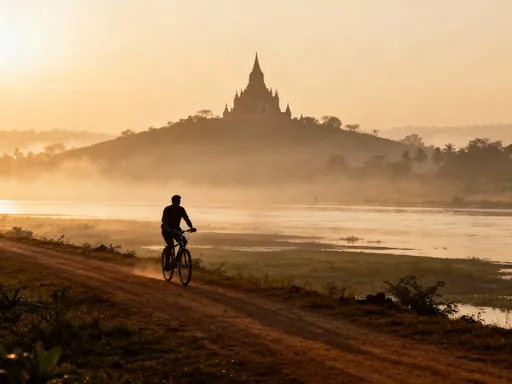
To truly understand Vientiane’s landscape, you must move through it slowly and thoughtfully. Cycling is by far the most rewarding way to feel the subtle changes in elevation and texture. The city is relatively flat, making it ideal for riders of all levels, but the real magic lies in the transitions — the shift from paved roads to compacted dirt paths, the slight incline as you approach a temple complex, or the soft give of red clay after a morning rain. Renting a bicycle from a local shop or hotel allows you to explore at your own pace, stopping to observe how the land slopes toward the river or how tree roots ripple through sidewalks. Early morning rides along the Mekong Riverside Road offer cool breezes, golden light, and uninterrupted views of the water’s edge, where the terrain meets the flow of life.
Walking offers an even more intimate connection. Designated trails like the one from Kaysone Park to the Presidential Palace reveal the city’s layered ground — smooth concrete near official buildings, uneven stone paths through gardens, and bare earth in shaded groves. One particularly engaging route follows the old city wall remnants near Haw Phra Kaew, where the ground rises slightly, offering a vantage point over surrounding rooftops. Pay attention to the textures underfoot: some areas are covered in fine gravel, others in packed laterite soil that turns deep red when dry. These variations are not accidental; they reflect centuries of foot traffic, erosion patterns, and intentional landscaping.
For a completely different perspective, take a boat trip along the Mekong. From the water, the city appears to rise gently from the shore, its buildings and trees forming a low skyline. You can see how the riverbank erodes in some places and deposits silt in others, creating natural terraces that shift with the seasons. Local operators offer short cruises at sunrise or sunset, when the light accentuates the contours of the land. As the boat glides forward, you’ll notice how temples and parks are positioned to maximize access to the river while staying safely above flood level. This low-angle view reveals what aerial maps often miss — the organic relationship between water, soil, and human settlement.
Top Spots Where the Landscape Steals the Show
Pha That Luang is perhaps the most powerful example of how terrain enhances meaning. Set on a raised platform surrounded by open space, the golden stupa stands in stark contrast to the flat expanse of the city. This deliberate elevation gives it a sense of grandeur and permanence, as if it emerges from the earth itself. During the annual festival, thousands gather on the surrounding grounds, their movements shaped by the flat, circular plaza that radiates outward. The lack of obstructions allows for unimpeded views and collective participation, reinforcing the stupa’s role as a unifying symbol. Even on quiet days, the site feels grounded — literally and spiritually — in the land.
Buddha Park, located just outside the city, offers a different kind of terrain-driven experience. Spread across uneven ground, the park’s collection of Buddhist and Hindu statues is arranged in a way that encourages exploration. Paths wind up small mounds, descend into shaded clearings, and lead to open fields where larger sculptures stand. The centerpiece, a massive reclining Buddha, lies at a slight incline, its head propped higher than its feet, following the natural slope of the land. This integration of art and topography creates a contemplative journey — one where every step reveals a new angle, a hidden figure, or a moment of stillness. The park’s designers did not flatten the land; they worked with it, allowing the contours to guide the visitor’s path.
Riverside parks like That Dam and Kaysone Park demonstrate how urban design can harmonize with natural terrain. That Dam, centered around an ancient black stone stupa, sits on slightly elevated ground, protecting it from seasonal floods. The surrounding area includes shaded seating, walking paths, and open lawns that slope gently toward the river. It’s a favorite spot for locals to relax in the evenings, when the heat fades and the breeze picks up. Kaysone Park, larger and more structured, uses gentle grading to create distinct zones — a children’s play area on higher ground, a central lawn for events, and a riverside promenade that follows the curve of the Mekong. Both parks prove that thoughtful landscaping can enhance both functionality and beauty, turning ordinary ground into a destination.
Smart Travel Tips for Navigating Vientiane’s Ground
Timing your visit to align with terrain conditions can greatly enhance your experience. The dry season, from November to April, is generally the best time to explore on foot or by bike. During these months, the Mekong is low, revealing more of the riverbank, and the soil is firm, making trails accessible. Mornings are especially pleasant, with cooler temperatures and lower humidity. The hot season, from March to April, can be intense, with temperatures often exceeding 35°C (95°F), so early starts and frequent hydration are essential. If you visit during the monsoon, be prepared for occasional downpours and muddy paths, but also enjoy the lush greenery and fewer crowds.
Footwear matters more than you might expect. While sandals are common in Laos, they offer little support on uneven or soft terrain. Closed-toe walking shoes with good grip are ideal, especially if you plan to explore parks, temple grounds, or village trails. Look for breathable materials to manage humidity, and consider lightweight hiking shoes if you intend to venture beyond the city center. A wide-brimmed hat, sunscreen, and a reusable water bottle are also essential. Don’t forget a small towel — dampness from sweat or unexpected rain can make long walks uncomfortable.
Technology can help you navigate the terrain wisely. While GPS works well in urban areas, local maps often provide better detail about trail conditions and elevation changes. Apps like Maps.me offer offline functionality and mark footpaths, parks, and river access points. Some guesthouses and tour operators provide printed maps that highlight safe walking and cycling routes, including those that avoid low-lying areas prone to flooding. If you’re exploring independently, ask your host for advice on which paths are currently passable — locals always know the latest conditions. And remember, sometimes the best way to understand the land is to pause, look around, and let it guide you.
Off-the-Beaten-Path Terrain Experiences
Beyond the well-trodden sights, Vientiane offers quieter encounters with its landscape. Northeast of the city, small villages like Ban Nahone and Ban Keun preserve traditional ways of living in harmony with the land. Here, rice fields stretch between clusters of wooden homes, connected by raised footpaths that stay dry during the rainy season. Walking these trails, you’ll feel the rhythm of rural life — farmers tending paddies, children cycling home from school, elders sitting on porches shaded by banana trees. These paths are not tourist attractions, but they welcome respectful visitors. Some community groups offer guided eco-walks, explaining how locals read the land, predict weather patterns, and maintain soil fertility without heavy machinery.
Despite its general flatness, Vientiane has a few vantage points that offer surprising views. One such spot is the rooftop of the Lao National Museum, where you can see the city spread out toward the river, with temple spires rising above the tree line. Another is the upper level of the Morning Market, where a walkway provides a panoramic view of stalls, streets, and the distant Mekong. These lookouts don’t offer mountain vistas, but they reveal the subtle beauty of a low-lying city — how light plays across rooftops, how green spaces break up the urban grid, and how the river anchors everything. They remind you that elevation isn’t the only way to gain perspective.
Community-led eco-walks are emerging as a meaningful way to connect with the land. Organized by local environmental groups or cultural centers, these walks focus on sustainability, traditional knowledge, and terrain literacy. Participants learn how to identify native plants, understand water flow patterns, and appreciate the role of wetlands in flood prevention. These experiences are not about adventure or thrill; they’re about awareness. They invite you to see the city not as a collection of buildings, but as a living system shaped by soil, water, and human care. For travelers seeking depth over spectacle, these quiet walks offer a rare and authentic connection.
Why This Matters: Connecting with Place Through Its Ground
Travel is often about seeing — monuments, markets, people, colors. But in Vientiane, the most lasting impressions come from feeling the earth beneath your feet. The terrain here teaches patience, observation, and respect. It reminds us that landscapes are not static backdrops but dynamic participants in daily life. When you cycle over a patch of red clay, pause at a riverside shrine, or stand on slightly raised ground during a festival, you’re not just visiting a place — you’re engaging with its essence. This kind of connection fosters deeper understanding, one that stays with you long after the photos fade.
Slowing down to notice the ground changes how you move through the world. It encourages mindfulness — noticing how your body responds to inclines, how light shifts with elevation, how sound carries across open fields. In a time when travel can feel rushed and transactional, Vientiane offers a different model: one rooted in presence, curiosity, and humility. You don’t need to climb mountains to feel awe; sometimes, it’s enough to stand on a slight rise and watch the river flow by.
Vientiane may not have dramatic peaks or roaring waterfalls, but its quiet, living landscape holds a different kind of power. It invites you to look closer, walk slower, and listen to the subtle language of the land. In doing so, you don’t just see a destination — you begin to understand it. And that understanding, born from the simple act of paying attention to the ground, is what makes travel truly transformative.