Hiking Through Desert Dreams: Where Trails Meet Wild Architecture in Eilat
You know what I didn’t expect in a desert city? Mind-blowing hikes wrapped around jaw-dropping, otherworldly structures. Eilat, Israel, isn’t just beaches and resorts—deep in its arid heart are trails that wind past ancient ruins, futuristic eco-buildings, and rock formations shaped like forgotten temples. I laced up my boots not knowing I’d be exploring both nature and architecture in one wild adventure. This is hiking redefined—raw, real, and totally unexpected.
Why Eilat Is More Than a Beach Escape
Eilat is widely celebrated as a Red Sea paradise, where turquoise waters lap against golden sands and luxury resorts line the coast. For many, the city represents relaxation, snorkeling, and sun-drenched holidays. Yet beyond the postcard-perfect shoreline lies a rugged, sun-scorched interior that tells a far more complex story. The desert that frames Eilat is not empty or lifeless—it is a dynamic landscape shaped by geological forces, human history, and visionary design. While most visitors never venture past the marina or coral beach, those who do discover a world where hiking trails double as open-air museums of architectural evolution.
The city’s unique geography positions it at the intersection of three continents—Asia, Africa, and Europe—creating a climate and terrain unlike any other in the region. Nestled between the Jordan Rift Valley and the Arava Desert, Eilat is flanked by craggy mountains and ancient wadis that have channeled water, trade, and culture for thousands of years. This convergence of natural and human movement has made the area a crossroads not only of people but of ideas, especially in how structures are built to survive and harmonize with the environment. The desert here does not resist architecture—it inspires it.
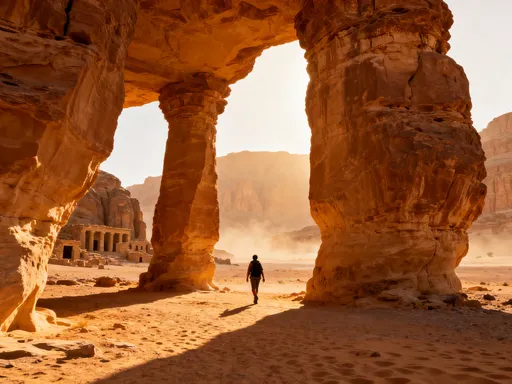
Hiking in Eilat, therefore, becomes more than a physical pursuit. It transforms into an exploration of adaptation, resilience, and creativity. Every path leads not just to a vista but to a revelation—whether it’s a Nabatean caravan route carved into stone, a modern solar-powered research outpost, or a natural rock spire that looks as if it were designed by an ancient civilization. These experiences reveal that Eilat is not merely a resort town but a living laboratory of how humans interact with extreme landscapes. For the thoughtful traveler, this duality—between leisure and discovery—makes Eilat a destination that satisfies both the body and the mind.
The Hidden Trail Network Beyond the Coast
While Eilat’s beaches draw international crowds, its inland trail system remains one of the best-kept secrets in Israeli tourism. Stretching from the northern edges of the city into the vast Timna Valley and branching into remote desert canyons, these routes offer hikers a chance to step off the beaten path—literally and figuratively. Unlike crowded urban parks or well-trodden mountain paths, Eilat’s desert trails are often quiet, with only the whisper of wind through acacia trees and the crunch of gravel underfoot to accompany the journey. The network includes over 50 kilometers of marked routes, ranging from easy half-hour loops to full-day treks that ascend steep ridgelines and descend into shadowed gorges.
The variety of trails ensures that hikers of all levels can find a route suited to their ability. Short desert loops, such as the 2-kilometer Trail of the Arches near Timna Park, are ideal for families or those new to desert hiking. These paths are well-marked with colored trail blazes and often feature interpretive signs explaining the geology, flora, and history of the area. Moderate ridge walks, like the 6-kilometer Snake Trail, offer panoramic views of the surrounding mountains and the Red Sea in the distance, with manageable elevation gains and shaded rest points. For the more adventurous, full-day mountain treks—such as the 14-kilometer circuit through the Hathor Temple area—require preparation but reward hikers with solitude, dramatic scenery, and intimate encounters with ancient and modern structures alike.
Accessibility is a key feature of Eilat’s trail system. Most major routes are reachable by car within 20 to 40 minutes from the city center, with designated parking areas and clear signage. The Israel Nature and Parks Authority maintains the trails and provides up-to-date information on conditions, closures, and safety recommendations. To avoid the intense midday heat, which can exceed 40°C (104°F) in summer, the best times to hike are early morning—between 5:30 and 9:00 a.m.—or late afternoon, from 4:00 p.m. onward. Winter months, from November to March, offer the most pleasant temperatures, often ranging between 18°C and 25°C (64°F to 77°F), making it the ideal season for extended exploration.
What sets these trails apart is not just their diversity but their ability to seamlessly integrate natural beauty with human-made wonders. Hikers don’t simply pass through the landscape—they engage with it. Each trail becomes a narrative thread, connecting ancient pathways with contemporary design, natural formations with constructed spaces. This interplay is what makes Eilat’s inland trails not just a place to walk, but a place to understand.
Timna Park: Nature’s Playground with Man-Made Marvels
At the heart of Eilat’s inland adventure lies Timna Park, a 40,000-dunam (40-square-kilometer) nature reserve that stands as one of the most fascinating intersections of geology, archaeology, and architecture in the Middle East. Managed by the Israel Nature and Parks Authority, the park is more than a scenic destination—it is a living archive of human innovation in one of the harshest environments on Earth. Here, the desert floor tells stories written in stone, copper, and sunlight. The landscape itself feels like a grand architectural exhibit, where natural rock formations and ancient ruins coexist in silent dialogue.
One of the park’s most compelling features is its ancient copper mine complex, believed to date back over 7,000 years. Archaeological evidence suggests that mining activity in Timna began as early as the Chalcolithic period and continued through the Bronze and Iron Ages. The ruins of smelting furnaces, stone hammers, and grinding tools have been uncovered, offering a tangible connection to the laborers who extracted and processed copper long before modern technology existed. Some scholars associate these mines with King Solomon’s legendary copper production, though the historical accuracy of this link remains debated among experts. Regardless, the site stands as a testament to early industrial engineering and the enduring human drive to harness natural resources.
Equally striking are the park’s natural rock formations, chief among them the iconic “Solomon’s Pillars.” These towering sandstone columns rise from the desert floor like the remnants of a lost temple, their layered striations revealing millennia of sediment deposition and erosion. Though entirely natural, their symmetry and verticality give them an architectural quality, as if they were designed by human hands. The pillars were formed by centuries of wind and water carving away softer rock, leaving behind harder, more resistant layers. Today, they serve as both a geological wonder and a symbolic gateway to the ancient world. Visitors can walk among them, touch their weathered surfaces, and imagine the civilizations that once gathered in their shade.
Timna Park also features reconstructed ancient structures, including a life-sized replica of a copper smelting furnace and a Bedouin tent village, helping visitors visualize how people lived and worked in this environment. The park’s visitor center includes interactive exhibits, maps, and guided tour options, making it an ideal starting point for hikers. Whether exploring the ancient mines, standing beneath the Pillars, or simply absorbing the vast silence of the desert, visitors to Timna experience a rare blend of natural beauty and human ingenuity—one that deepens with every step.
The Mushroom: When Desert Erosion Creates Iconic Form
Among the most photographed and mystifying landmarks in Timna Park is “The Mushroom,” a surreal rock formation that seems to defy the laws of balance and time. Shaped by wind, water, and differential erosion over tens of thousands of years, this structure features a broad, rounded capstone perched delicately atop a narrow, column-like base—resembling a giant desert fungus rising from the sand. Its improbable silhouette has made it a favorite subject for photographers, artists, and curious travelers seeking something truly otherworldly.
The formation’s unique shape is the result of two distinct layers of sandstone. The upper layer is denser and more resistant to erosion, while the lower layer is softer and more easily worn away by wind and occasional flash floods. Over time, the wind sculpts the base into a slender pedestal, while the cap remains largely intact, creating the mushroom-like appearance. This process, known as pedestal rock formation, occurs in arid environments where erosion is selective and gradual. The Mushroom is not static—it continues to change, slowly, with each passing season. Geologists estimate that it may stand for hundreds, perhaps thousands, of more years, but eventually, the base will erode enough to cause collapse. For now, it remains a powerful symbol of nature’s patient artistry.
Hiking to The Mushroom is a short but unforgettable experience. A well-marked 1.5-kilometer trail leads from the park’s central parking area directly to the formation, with gentle elevation and clear signage. The path winds through a rocky desert landscape dotted with acacia trees, desert hyacinths, and the occasional ibex watching from a distance. As hikers approach, the Mushroom emerges gradually, first as a silhouette against the sky, then as a full, awe-inspiring structure. The area around it is open for exploration, with designated spots for photography and rest. Many visitors sit in the shade of the capstone, marveling at how such a delicate balance could exist in such a harsh environment.
What makes The Mushroom more than just a geological curiosity is the way it evokes architectural design. Its form resembles modern organic architecture—structures inspired by nature, such as the works of Antoni Gaudí or contemporary eco-buildings with flowing, biomorphic shapes. Standing beneath it, one cannot help but feel a sense of wonder at how nature, without plans or tools, can create something so perfectly balanced and visually striking. It is a reminder that architecture does not always require blueprints—sometimes, it is written in wind and stone.
Modern Eco-Architecture in the Middle of Nowhere
While Eilat’s desert preserves ancient human ingenuity, it also showcases cutting-edge responses to environmental challenges through modern eco-architecture. Scattered across the arid landscape are structures designed not to dominate nature, but to blend with it—research stations, observation decks, and experimental eco-lodges that prioritize sustainability, energy efficiency, and minimal ecological impact. These buildings represent a new chapter in desert design, where innovation meets responsibility.
One notable example is the Timna Park Visitor and Research Center, which incorporates passive solar design, natural ventilation, and locally sourced stone and rammed earth materials. The building’s low profile and earth-toned exterior allow it to merge seamlessly with the surrounding hills, reducing visual disruption. Solar panels provide much of the facility’s energy, while rainwater harvesting systems support irrigation for native plants. The center serves not only as an administrative hub but as a demonstration of how architecture can be both functional and environmentally respectful.
Beyond official facilities, independent architects and environmental groups have developed prototype eco-lodges and desert shelters that experiment with sustainable living in extreme climates. These structures often use recycled materials, modular designs, and innovative insulation techniques to maintain comfortable indoor temperatures without relying on excessive air conditioning. Some feature green roofs planted with drought-resistant vegetation, while others utilize underground construction to take advantage of the earth’s natural cooling properties. Though not all are open to the public, their presence along certain trails offers hikers a glimpse into the future of desert habitation.
What makes these modern designs so compelling is their dialogue with the past. Many draw inspiration from traditional desert architecture—such as the thick stone walls of ancient Nabatean buildings or the shaded courtyards of Bedouin encampments—while applying contemporary technology to enhance performance. This fusion of old and new creates a powerful narrative: that sustainable design is not a recent invention, but a return to time-tested principles adapted for today’s world. For hikers, encountering these structures in the middle of the desert feels like stumbling upon quiet revolutions—small, thoughtful acts of creation that challenge the notion that progress must come at nature’s expense.
Ancient vs. Modern: A Dialogue Across Time
Walking through Eilat’s desert trails, one begins to notice a profound continuity between ancient and modern architecture. Though separated by millennia, both reflect a shared imperative: to survive and thrive in an environment defined by scarcity, heat, and isolation. The Nabateans, who once controlled trade routes through this region, built low-slung stone structures with narrow entrances and thick walls to keep interiors cool. They engineered sophisticated water collection systems, carving channels and cisterns into rock to capture rare rainfall. These techniques were not merely practical—they were architectural wisdom born of necessity.
Today’s eco-buildings echo these strategies with remarkable fidelity. Modern architects use thermal mass walls, strategic shading, and natural airflow to reduce energy consumption, just as the Nabateans did. The difference lies in the tools: where ancient builders relied on hand-carved stone and manual labor, today’s designers employ computer modeling, advanced insulation, and renewable energy systems. Yet the goal remains the same—to live in harmony with the desert, not in opposition to it. This continuity suggests that true innovation in architecture is not always about novelty, but about rediscovering and refining what has already proven effective.
The trails of Eilat offer a rare opportunity to witness this dialogue firsthand. Hikers may start the day exploring a 2,000-year-old Nabatean watchtower, then later encounter a solar-powered research station using photovoltaic glass and wind turbines. The contrast is striking, yet the underlying philosophy is consistent: respect for the environment, adaptation to climate, and a commitment to sustainability. These lessons are not confined to architects or engineers—they are accessible to anyone willing to walk, observe, and reflect.
For the thoughtful traveler, this convergence of past and present offers more than historical interest. It provides hope. In an age of climate uncertainty, Eilat’s desert stands as a testament to human resilience and creativity. It shows that solutions to environmental challenges are not always high-tech or expensive—they can be simple, local, and deeply rooted in tradition. Every stone wall, every shaded courtyard, every solar panel is a chapter in an ongoing story of survival and ingenuity.
Practical Tips for the Architecture-Focused Hiker
For those planning to explore Eilat’s desert trails with an eye toward architectural discovery, preparation is key. The desert environment demands respect, and even short hikes can become challenging without proper planning. First and foremost, hydration is essential. Experts recommend carrying at least three liters of water per person for a half-day hike, and more for full-day treks. Electrolyte supplements can help prevent dehydration, especially in summer. Lightweight, breathable clothing in light colors helps reflect sunlight, while a wide-brimmed hat and UV-protective sunglasses provide critical protection from intense solar exposure.
Footwear should be sturdy and broken in, with good ankle support for rocky terrain. Many trails involve loose gravel, steep ascents, and uneven surfaces, making hiking boots a wise choice. A backpack with a hydration bladder, trail map, first-aid kit, and emergency whistle is advisable. While most trails are well-marked, carrying a GPS device or using a reliable hiking app can provide added security in remote areas. Sunscreen with high SPF should be applied regularly, and hikers should avoid exposed skin during peak sun hours.
For those particularly interested in architectural and historical sites, guided tours can enhance the experience. The Israel Nature and Parks Authority offers ranger-led walks in Timna Park that focus on archaeology, geology, and sustainable design. These tours provide context and insights that might otherwise be missed. Alternatively, self-guided audio tours are available through the park’s official website and mobile app, allowing visitors to explore at their own pace.
Recommended routes for combining scenic beauty with architectural discovery include the Timna Park Circuit Trail, which links Solomon’s Pillars, The Mushroom, and the ancient mines; the Hathor Temple Trail, which passes a reconstructed Egyptian shrine and offers panoramic views; and the Desert Canyons Loop, which features natural rock arches and occasional sightings of modern eco-structures. Each of these routes offers a balanced mix of physical challenge and intellectual reward.
Ultimately, hiking in Eilat is not just about reaching a destination—it’s about engaging with a landscape that has shaped human creativity for thousands of years. From ancient copper smelters to solar-powered research centers, every structure tells a story of adaptation, vision, and resilience. For the curious traveler, especially those who appreciate the quiet power of design, Eilat offers a journey unlike any other—one where the desert itself becomes a teacher.
Eilat’s desert trails offer more than physical challenge—they’re a journey through layers of human ingenuity and natural artistry. From ancient stone to modern sustainability, every step reveals a story shaped by sun, wind, and vision. This isn’t just hiking; it’s a conversation between earth and design.