You Won’t Believe What I Found in Abu Dhabi’s Art Scene
Abu Dhabi isn’t just about luxury and skyscrapers—its cultural heartbeat is real and raw. I went searching for art and walked into a world of tradition meeting innovation. From massive museums to quiet alleyway murals, every corner tells a story. This is culture not staged for tourists, but lived, breathed, and created daily. If you think the UAE is all about oil and malls, trust me—you’re in for a serious wake-up call.
The Soul Behind the Sand: Why Abu Dhabi’s Culture Surprised Me
At first glance, Abu Dhabi can appear as a city sculpted by modernity—gleaming towers rising from the desert, wide boulevards lined with palm trees, and a skyline that reflects ambition and progress. But beneath this polished surface lies a deeper narrative, one rooted in centuries of tradition, resilience, and identity. What surprised me most during my visit was not the grandeur of its architecture, but the quiet strength of its cultural soul. The Emirati people are deeply connected to their heritage—pearl diving, falconry, poetry, and oral storytelling are not relics of the past but living practices passed down through generations.
This cultural grounding shapes how art is understood and expressed in Abu Dhabi. Rather than imitating global trends, local artists draw from ancestral knowledge, reinterpreting it through contemporary mediums. The result is a creative scene that feels authentic, intentional, and emotionally resonant. For example, many installations incorporate traditional weaving patterns or calligraphy, transforming them into modern visual statements. This blending of old and new isn’t done for novelty—it’s a way of honoring lineage while embracing evolution.
What makes this cultural moment particularly powerful is its accessibility. Unlike some capitals where art feels exclusive or academic, Abu Dhabi’s creative energy radiates into public spaces, schools, and community centers. Families gather at cultural festivals, children participate in heritage workshops, and elders share stories in museum courtyards. Art here isn’t separated from daily life—it’s woven into it. This integration reflects a national vision that values identity as much as innovation, ensuring that rapid development does not come at the cost of cultural memory.
Louvre Abu Dhabi: Where Civilizations Talk
Standing on Saadiyat Island, the Louvre Abu Dhabi emerges like a vision from a dream—its vast silver dome shimmering under the sun, casting intricate patterns of light and shadow across the white stone plaza below. Designed by architect Jean Nouvel, the museum’s structure is inspired by the interlaced palm fronds of a traditional falaj irrigation system, creating what visitors often describe as a 'rain of light.' But beyond its architectural beauty, the Louvre Abu Dhabi represents something more profound: a space where global civilizations engage in quiet dialogue.
The museum’s collection is intentionally universal, bringing together artifacts from Mesopotamia, ancient Greece, medieval Europe, Islamic empires, and pre-Columbian Americas. A bronze statue of a dancing Shiva stands near a 12th-century Madonna and Child; a Quran manuscript from Kufa shares a gallery with a sketch attributed to Leonardo da Vinci. These juxtapositions are not random—they are curated to highlight shared human experiences: spirituality, power, love, and the search for meaning. For a visitor, the effect is humbling and expansive, reminding us that culture is not isolated but interconnected.
What sets this institution apart from other international art outposts is its commitment to balance. While it carries the Louvre name through a 30-year agreement with France, it is not a satellite or replica. Instead, it functions as an independent museum with a distinct mission: to present art as a unifying force. Local curators play a central role in shaping exhibitions, ensuring Emirati and Gulf perspectives are not footnotes but central voices. Temporary shows often spotlight Arab artists or explore regional themes, such as the legacy of maritime trade or the role of women in Islamic scholarship.
For families visiting the museum, the experience is both educational and inspiring. Interactive displays, guided storytelling sessions, and multilingual audio guides make the content accessible to children and non-specialists. There’s a sense that art is not just to be observed, but to be understood and felt. As one educator told me, “We don’t want people to leave knowing more facts—we want them to leave seeing the world differently.” In a city often associated with speed and luxury, the Louvre Abu Dhabi invites slowness, reflection, and connection.
Qasr Al Hosn: The Emirate’s Living Memory
If the Louvre Abu Dhabi looks toward the world, Qasr Al Hosn gazes inward—into the heart of Emirati history. As the oldest stone building in Abu Dhabi, this fortified watchtower-turned-palace has stood at the city’s center since the late 18th century. Once the residence of ruling sheikhs and the seat of governance, it now serves as a cultural landmark that honors the emirate’s origins. But what makes Qasr Al Hosn remarkable is that it doesn’t feel like a static monument. It is a living archive, where history is not only preserved but actively interpreted and shared.
Walking through its coral stone walls and arched corridors, I was struck by the layers of time embedded in the structure. Each restoration phase has been carefully documented and displayed, allowing visitors to trace how the building evolved alongside the nation. Exhibits blend original artifacts—such as old maps, weapons, and handwritten decrees—with immersive technologies. One room uses projected light and sound to recreate the atmosphere of a 19th-century council meeting, where tribal leaders gathered under flickering lanterns to discuss trade and justice.
Even more powerful are the oral history programs hosted at the site. Elders from local communities are invited to share personal memories—of desert life, pearl diving expeditions, and the early days of oil discovery. These sessions are recorded and archived, ensuring that firsthand accounts are not lost to time. For younger Emiratis, hearing these stories in the very place where decisions were once made creates a tangible link to their ancestors. It’s not history as a textbook lesson, but as a shared family narrative.
Seasonal events further animate the space. During cultural festivals, the courtyard fills with traditional music, poetry recitals, and craft demonstrations. Children learn how to make date syrup or weave palm fronds, while adults watch performances of al-ayyalah, a rhythmic dance once performed before battle. These activities transform Qasr Al Hosn from a historical site into a community hub—one that honors the past without being trapped by it. In doing so, it models how heritage can be both respected and revitalized.
Al Ain’s Creative Pulse: Art Beyond the Capital
Just a 90-minute drive inland from Abu Dhabi lies Al Ain, a green oasis city recognized by UNESCO for its cultural and natural significance. Known as the “Garden City” of the UAE, Al Ain offers a different rhythm—slower, greener, and deeply connected to the land. But beyond its date farms and ancient forts, Al Ain has quietly become a center for artistic experimentation and grassroots creativity. Here, art is not about spectacle, but about sustainability, identity, and community engagement.
The city hosts several artist residencies and independent galleries that support local talent. At the Al Ain Arts & Crafts Centre, I met painters, sculptors, and textile artists who blend Bedouin motifs with contemporary techniques. One artist uses sand from the surrounding desert to texture her canvases, creating abstract landscapes that shift in color with the light. Another transforms discarded metal from old irrigation systems into delicate sculptures of birds and camels—symbols of movement and survival.
What stands out in Al Ain is the emphasis on intergenerational collaboration. Workshops often bring together elders and youth, where traditional skills like pottery or henna design are taught alongside digital illustration or photography. This fusion fosters mutual respect and innovation. A recent exhibition titled 'Roots and Wings' showcased collaborative pieces—hand-stitched textiles overlaid with augmented reality elements that, when scanned, played recorded family stories. Such projects demonstrate how technology can deepen cultural understanding rather than replace it.
The city’s UNESCO designation has also encouraged preservation efforts that include artistic interpretation. At the Al Jahili Fort, once a defensive structure, multimedia installations now tell the story of explorer Wilfred Thesiger’s journeys across the Empty Quarter. Elsewhere, public art trails guide visitors through historical neighborhoods, with murals depicting scenes of traditional life alongside poetic reflections in Arabic calligraphy. Al Ain proves that art thrives not only in cosmopolitan centers but in places where history, nature, and community converge.
Street Art & Urban Expression: Hidden Layers of the City
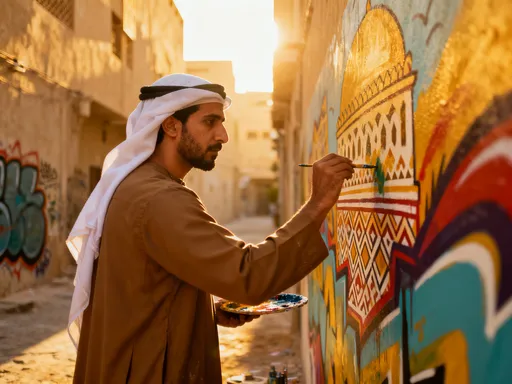
In a society often perceived as conservative, the emergence of street art in Abu Dhabi might seem unexpected. Yet, in neighborhoods like Al Mina and Al Bateen, vibrant murals have begun to appear on building facades, underpasses, and community walls. These works are not acts of rebellion, but carefully commissioned expressions of identity, belonging, and social values. They reflect a growing appetite among younger generations to contribute to the city’s visual language while respecting its cultural framework.
One striking mural in Al Mina depicts a falcon in mid-flight, its wings formed from traditional geometric patterns. Nearby, another wall shows children playing traditional games like daramsha and hai’l, rendered in bold colors and dynamic lines. These images celebrate Emirati childhood and outdoor play at a time when screen time is increasing. Artists often work with municipal councils and cultural foundations to ensure themes align with community values, resulting in public art that feels inclusive rather than confrontational.
The evolution of street art here is gradual and thoughtful. Unlike cities where graffiti emerges spontaneously, Abu Dhabi’s urban art grows through structured initiatives—public art festivals, youth competitions, and partnerships with schools. The Department of Culture and Tourism regularly commissions murals that align with national themes, such as environmental conservation or the Year of Tolerance. In one project, students from different schools co-created a 30-meter-long mural symbolizing unity, using recycled paint and natural pigments.
For residents, these artworks transform mundane spaces into points of pride and conversation. A mother told me her daughter now points out murals on their way to school, asking about the symbols and stories behind them. In this way, street art becomes a form of informal education—an open-air classroom where culture is learned not through lectures, but through daily encounters. It’s a quiet revolution, one brushstroke at a time, redefining what public space can mean in a rapidly developing city.
Performing Arts & Cultural Festivals: When Tradition Takes Stage
While visual art captures the eye, the performing arts stir the soul—and in Abu Dhabi, they are alive and evolving. Traditional Emirati music and dance remain central to cultural expression, performed at weddings, national celebrations, and heritage nights. One evening, I attended a cultural performance at the Heritage Village, where a group of men formed a circle, clapping in unison as a soloist sang poetic verses about the sea and desert. This was al-razfa, a centuries-old performance combining poetry, rhythm, and synchronized movement.
What moved me was not just the precision of the performance, but the transmission of emotion. The lyrics spoke of longing, courage, and unity—themes that still resonate today. Children in the audience watched intently, some mimicking the hand movements or humming along. These moments are how culture survives—not through textbooks, but through participation. Families pass down songs and dances just as they pass down recipes or family names, ensuring continuity across generations.
At the same time, Abu Dhabi is nurturing new forms of artistic expression. The annual Abu Dhabi Festival brings together Arab and international performers, from classical musicians to contemporary dancers. In recent years, the festival has commissioned original works that blend Arabic maqam scales with Western orchestration, or fuse traditional Emirati movement with modern choreography. These productions are not about replacing tradition, but expanding its vocabulary.
Behind the scenes, community workshops and youth academies are building the next generation of artists. At the Performing Arts Academy, teenagers train in vocal techniques, instrument mastery, and stage presence. Teachers emphasize both technical skill and cultural understanding, ensuring that performers know not only how to sing or dance, but why these art forms matter. For many families, enrolling children in these programs is a way of honoring heritage while preparing them for global opportunities. The stage, in this sense, becomes a bridge—between past and future, local and global, heart and horizon.
Supporting Local Artisans: From Souq Stalls to Design Studios
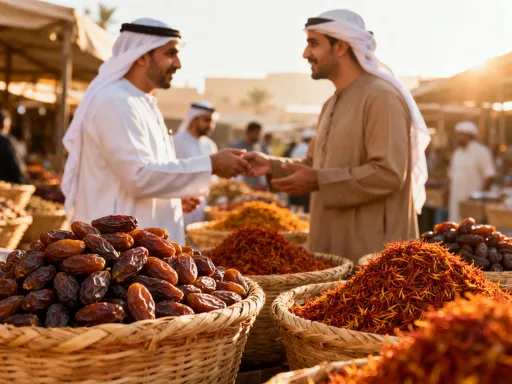
No exploration of Abu Dhabi’s art scene is complete without encountering its artisans—the hands that shape culture through material and craft. In the covered lanes of the Central Souq in Al Ain or the weekend craft markets of Abu Dhabi, artisans sell handwoven sadu textiles, intricately carved incense burners, and hand-thrown ceramics. These are not mass-produced souvenirs, but objects made with intention, patience, and pride. Each piece carries the imprint of its maker, telling stories through pattern, texture, and form.
Sadu weaving, traditionally done by Bedouin women, uses geometric motifs to represent elements of desert life—camels, water wells, or tribal alliances. Today, designers are reimagining these patterns in modern contexts: woven into lampshades, chair covers, or even smartphone cases. At Warehouse421, a contemporary design hub on Mina Zayed, I saw an exhibition where young Emirati designers collaborated with master weavers to create functional art pieces that honor tradition while serving modern lifestyles. One lamp, made from layered sadu fabric and recycled glass, cast intricate shadows resembling desert constellations.
Supporting these artisans goes beyond aesthetics—it’s an act of cultural preservation. When travelers purchase handmade goods, they contribute to sustainable livelihoods and help keep endangered crafts alive. Many artisans rely on market sales and workshop income to support their families, and rising interest in authentic, ethical products has given them new visibility. Social media has also played a role, allowing craftswomen and men to share their processes and connect directly with buyers.
For visitors, engaging with artisans offers a more meaningful travel experience. Rather than simply observing culture from a distance, they can participate—learning to weave, trying their hand at calligraphy, or commissioning a custom piece. These interactions foster mutual respect and understanding. As one potter told me, “When someone takes the time to learn our craft, they’re not just buying an object—they’re honoring our story.” In a world of fast fashion and disposable goods, such moments of connection feel rare and precious.
Abu Dhabi’s art and culture aren’t confined to galleries—they pulse through its people, architecture, and everyday life. This city proves that progress doesn’t erase heritage; it can amplify it. For travelers seeking authenticity, the real magic lies in slowing down, looking closely, and listening. The UAE’s cultural renaissance is already here. Are you ready to see it?