You Won’t Believe What I Saw in Milford Sound
Have you ever seen a place so wild and untouched it feels like the world’s best-kept secret? That’s Milford Sound. Towering cliffs, cascading waterfalls, and silence so deep you can hear your soul breathe. I didn’t expect to be moved by a landscape—but this one shattered my expectations. It’s not just beautiful; it’s alive. And honestly? You gotta experience it to believe it.
First Glimpse: Entering Fiordland’s Hidden Heart
Reaching Milford Sound is an adventure in itself, a slow unveiling of one of Earth’s most dramatic landscapes. The journey begins with a winding 120-kilometer drive along State Highway 94, known as the Milford Road, cutting through the heart of Fiordland National Park—a UNESCO World Heritage site. As the road climbs and twists, dense rainforests of beech and rimu trees rise on either side, their trunks draped in thick mosses and ferns. The air grows cooler and damper, carrying the earthy scent of wet soil and decaying leaves, a fragrance unique to ancient forests.
Then comes the descent into the Eglinton Valley, where open grasslands stretch beneath snow-dusted peaks. It’s easy to imagine herds of deer or even a lone hiker crossing the meadow, though visitors are rare this far south in New Zealand’s South Island. The true magic begins when the road narrows and enters the Homer Tunnel—a single-lane bore carved through solid rock, lit only by dim overhead lights. For nearly two kilometers, drivers are enveloped in darkness, a symbolic passage from the ordinary into the extraordinary.
And then, suddenly, the tunnel ends. Sunlight floods the windshield, and there it is: Milford Sound, stretching out like a liquid mirror framed by sheer rock walls. The fiord isn’t technically a sound—it’s a glacial fjord, shaped over millions of years by slow-moving glaciers that carved deep U-shaped valleys into the Southern Alps. When the ice retreated, the sea flooded in, creating a narrow inlet over 15 kilometers long and more than 400 meters deep in places. The cliffs rise almost vertically from the water, some exceeding 1,200 meters in height, their surfaces pockmarked with cracks where water seeps through and feeds countless temporary waterfalls.
This isolation is part of what makes Milford Sound so powerful. Located in one of the most remote corners of New Zealand, it remains largely untouched by urban development. There are no towns along the fiord, only a small visitor complex and a handful of lodges tucked near the marina. The lack of light pollution means stars blaze overhead on clear nights, and the sounds of nature—bird calls, lapping waves, distant thunder—dominate the silence. To stand at the edge of this place is to feel humbled, as if stepping into a cathedral built not by hands, but by time and ice.
The Majesty of Mitre Peak: Nature’s Cathedral
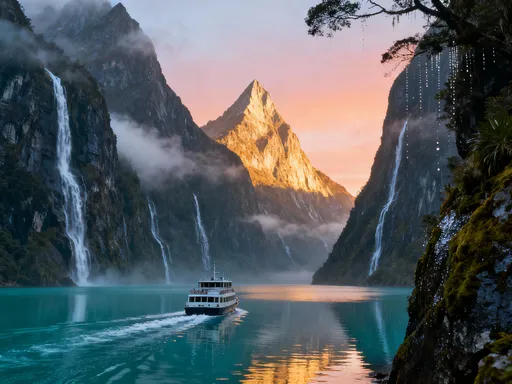
No image of Milford Sound is complete without Mitre Peak, the iconic mountain that rises 1,692 meters straight from the dark waters of the fiord. Its name comes from its resemblance to the ceremonial headdress worn by bishops—a pointed, symmetrical crown that seems almost too perfect to be natural. Yet this dramatic silhouette is the result of relentless glacial erosion, where ice carved away softer rock, leaving behind a near-vertical pyramid of hard granite and gneiss.
Mitre Peak is often cited as one of the most photographed landmarks in New Zealand, and for good reason. Its reflection in the still waters of the fiord creates a mirror image so sharp it blurs the line between reality and illusion. At sunrise, the first golden rays strike the summit, slowly warming the rock face as mist curls upward from the sea. By midday, the peak stands in full light, its rugged contours casting deep shadows across the valley. But it’s at dusk that Mitre Peak truly transforms—bathed in soft amber and rose hues, its silhouette darkening against a painted sky, a moment many visitors describe as spiritual.
Photographers and travelers alike plan their trips around these lighting conditions. Early morning cruises are popular for capturing the peak in soft, diffused light, while late-day tours offer the drama of sunset. Cloud cover can enhance the mood, diffusing sunlight and creating a moody, atmospheric glow. On rare clear nights, the peak can even be seen under moonlight, its outline ghostly and serene. The mountain doesn’t just dominate the skyline—it dominates the experience, a constant presence that reminds visitors of nature’s grandeur and permanence.
Despite its fame, Mitre Peak remains inaccessible to all but the most experienced climbers. There are no marked trails to its summit, and the rock faces are treacherous, prone to sudden weather shifts and rockfall. This inaccessibility only adds to its mystique. Unlike many iconic peaks around the world that have been conquered by thousands, Mitre Peak retains an air of mystery, a monument best admired from afar, its secrets held close by the elements.
Waterfalls That Appear Out of Nowhere
One of the most magical phenomena in Milford Sound is the sudden appearance of waterfalls where none existed moments before. These aren’t permanent features—they are born from rain, and they vanish just as quickly when the skies clear. Milford Sound is one of the wettest places on Earth, receiving an average of over 6,000 millimeters of rainfall each year. In some seasons, it rains on more than 180 days, feeding the countless streams and seepages that lace the fiord’s cliffs.
After a heavy downpour, the landscape transforms. Water begins to trickle down rock faces, then grows into steady streams, and finally bursts into full cascades that plunge hundreds of meters into the sea. Some of these temporary falls have names—like Stirling Falls and Bowen Falls—but many remain unnamed, appearing like silver threads stitched into the mountainside. On particularly wet days, dozens of these ephemeral waterfalls can be seen at once, turning the fiord into a living tapestry of motion and sound.
Boat tours often pause beneath these falls, allowing passengers to feel the cool mist on their faces and hear the thunderous roar as water crashes into the sea. Some captains even cut the engines, letting silence settle over the group, broken only by the rhythmic pounding of falling water. It’s a humbling reminder of nature’s power—how a single storm can reshape the visual language of an entire landscape in hours.
Ironically, many visitors hope for rain when visiting Milford Sound. While clear skies offer better visibility, it’s the rain that brings the waterfalls to life. This paradox defines much of the fiord’s allure: its beauty is not static, but dynamic, shaped by weather and season. A visit on a misty, drizzly day might lack sunshine, but it offers a different kind of magic—one of mystery, movement, and raw natural energy. Travelers who come seeking perfection in form may miss the deeper truth: that Milford Sound is most alive when it’s wet, wild, and untamed.
Wildlife in the Wild: Dolphins, Seals, and Rare Birds
Beneath the towering cliffs and shimmering waters of Milford Sound thrives a rich and delicate ecosystem. Though the landscape may seem harsh and remote, it supports a surprising variety of native wildlife, much of it found nowhere else on Earth. The fiord’s deep, cold waters and surrounding rainforests create a sanctuary for species that have vanished from other parts of New Zealand due to human activity and invasive predators.
One of the most joyful encounters visitors experience is with the dusky dolphins. These sleek, acrobatic mammals are often seen riding the bow waves of cruise ships, leaping and spinning just meters from the deck. Unlike their more common cousins, the bottlenose dolphins, dusky dolphins are smaller and more agile, traveling in tight pods of 20 to 100 individuals. Their playful behavior is not just entertaining—it’s a sign of a healthy marine environment, where food is abundant and threats are few.
Along the rocky shores, New Zealand fur seals can be seen basking in the sun or diving for fish. Once hunted nearly to extinction for their pelts, these animals have made a strong comeback thanks to conservation efforts. They are curious but cautious, often lifting their heads to watch passing boats with dark, intelligent eyes. Occasionally, a seal pup can be spotted nearby, still learning to swim and hunt under the watchful eye of its mother.
For birdwatchers, Milford Sound offers rare glimpses of some of New Zealand’s most endangered species. The kea, a mischievous alpine parrot known for its intelligence and curiosity, sometimes swoops down from the mountains, drawn by the smell of food or the sound of human voices. Though they’re not native to the fiord itself, their presence in the surrounding park is a sign of ecological connectivity. More elusive is the takahe, a flightless bird with vibrant blue and green feathers, once thought extinct until rediscovered in the Murchison Mountains nearby. While spotting one in the wild is extremely rare, their survival is a testament to New Zealand’s commitment to native species recovery.
Fiordland National Park, which encompasses Milford Sound, is managed with strict environmental protections. Introduced predators like rats, stoats, and possums are actively controlled, and visitor impact is minimized through regulated access and education. Every cruise guide emphasizes the importance of staying quiet, keeping distance from wildlife, and leaving no trace. These efforts ensure that the animals of Milford Sound continue to thrive—not as attractions, but as rightful inhabitants of a wild and sacred place.
Choosing Your Adventure: Cruise, Kayak, or Hike?
Experiencing Milford Sound isn’t a one-size-fits-all journey. The way you choose to explore the fiord shapes your entire experience, revealing different textures, sounds, and perspectives of this vast landscape. The most popular option is the scenic cruise, which runs daily from the marina and lasts between one and two hours. These cruises are accessible to all ages and mobility levels, offering warm cabins, informative commentary, and panoramic views from multiple decks. Many include stops beneath waterfalls and opportunities to spot wildlife, making them ideal for families and first-time visitors.
For a more intimate encounter, sea kayaking offers a profound sense of connection to the environment. Paddling silently through the calm waters at dawn, surrounded by towering cliffs and mirrored skies, creates a meditative experience unlike any other. Kayakers can glide into narrow coves, listen to the drip of water from overhanging ferns, and feel the cool spray of distant falls. While physically demanding, kayaking allows access to quiet corners of the fiord that larger boats cannot reach. Guided tours provide all necessary equipment and safety briefings, making this adventure suitable even for beginners with a moderate fitness level.
For those who prefer solid ground, hiking offers another way to engage with Fiordland’s beauty. While there are no major trails directly along Milford Sound, the nearby Kepler Track—one of New Zealand’s Great Walks—provides stunning views of the region from above. This 60-kilometer loop trail takes hikers through alpine ridges, beech forests, and river valleys, with lookout points that offer sweeping vistas of the surrounding fiords. For a shorter option, the Milford Foreshore Walk is a gentle 1.5-kilometer path that follows the edge of the marina, passing through native bush and offering views of the fiord and surrounding peaks.
Each mode of exploration has its trade-offs. Cruises offer comfort and convenience but can feel crowded during peak season. Kayaking provides solitude and immersion but depends heavily on weather conditions. Hiking rewards with panoramic views but requires more time and preparation. The best approach may be to combine two experiences—starting with a cruise to grasp the scale of the fiord, then returning for a kayak trip or a forest walk to absorb its quieter details. Regardless of the path chosen, preparation is key: booking in advance, checking weather forecasts, and packing layers for the unpredictable climate.
Why Timing Matters: Seasons, Weather, and Crowds
When you visit Milford Sound can be just as important as how you visit. The fiord’s character shifts dramatically with the seasons, offering distinct experiences depending on the time of year. Summer, from December to February, is the most popular season, with longer daylight hours, milder temperatures, and generally calmer waters. This makes it ideal for families and international travelers with limited vacation time. However, it also brings larger crowds, especially on cruise boats, and higher accommodation prices in nearby Te Anau.
Winter, from June to August, presents a different kind of beauty. Snow caps the peaks, and the air is crisp and clear—when the weather cooperates. While rainfall remains high, cold temperatures can freeze waterfalls into icy sculptures, and fog often drifts through the valley like smoke. Fewer tourists mean a more peaceful experience, and the silence of a winter morning on the fiord is unforgettable. The trade-off is shorter days and a higher chance of tour cancellations due to snow on the Milford Road. Still, for those seeking solitude and dramatic atmosphere, winter can be the most rewarding time to visit.
The shoulder seasons—spring (September to November) and autumn (March to May)—often strike the best balance. Rainfall is still high, ensuring that waterfalls are active, but temperatures are milder and crowds are smaller. Autumn brings golden hues to the beech forests, while spring sees new growth emerging from the damp earth. These seasons appeal to photographers and nature lovers who want both beauty and tranquility.
Weather in Milford Sound is famously unpredictable. It’s not uncommon to experience all four seasons in a single day—sunshine, rain, wind, and fog within hours. This volatility is part of the fiord’s charm, but it demands flexibility. Travelers should always have a backup plan and be ready to adjust their schedule. Checking road conditions, booking flexible accommodations, and packing waterproof gear are essential. Ultimately, the best time to visit is when you’re prepared to embrace the unexpected, knowing that even a rainy day can yield moments of breathtaking beauty.
Beyond the View: Why Milford Sound Stays With You
Most tourist destinations are remembered for what they look like. Milford Sound is remembered for how it makes you feel. Long after the photos are uploaded and the souvenirs packed away, visitors speak of a lingering sense of awe—a quiet shift in perspective that stays with them. It’s not just the scale of the cliffs or the height of the waterfalls, but the totality of the experience: the silence, the solitude, the sense of being small in a vast and ancient world.
Psychologists have long studied the effects of nature on mental well-being, and places like Milford Sound embody what they call “soft fascination”—environments that capture attention without effort, allowing the mind to rest and reset. The rhythmic sound of water, the slow drift of mist, the endless green of the forests—these elements engage the senses gently, reducing stress and promoting mindfulness. For many, a visit feels less like tourism and more like a retreat, a chance to disconnect from the noise of daily life and reconnect with something deeper.
But there’s also a moral dimension to the experience. Standing at the edge of such untouched beauty, it’s impossible not to feel a responsibility to protect it. Milford Sound is not a theme park or a curated attraction—it is a living ecosystem, fragile and finite. Every visitor leaves a footprint, whether through carbon emissions, waste, or simply the wear of footpaths. That’s why sustainable tourism isn’t just a policy here; it’s a necessity.
Travelers are encouraged to visit with reverence—to stay on marked trails, respect wildlife, and minimize waste. Choosing eco-certified tours, supporting local conservation efforts, and spreading awareness can help ensure that future generations will also stand in awe beneath Mitre Peak. In a world where so much is changing, places like Milford Sound remind us of what endures: the power of nature, the beauty of silence, and the deep human need for wonder.
So yes, you should go. You should see the waterfalls appear from the mist, hear the dolphins leap beside your boat, and feel the cool air fill your lungs. But when you do, go not just to see, but to listen. To breathe. To remember that some places are not meant to be conquered, but honored. And when you leave, carry that feeling with you—not as a memory, but as a quiet promise to protect the wild places that still remain.